The main thing to know is that people have always preserved food in times of glut. That means its possible to do so without any fancy equipment or scientific knowledge. Here though are a few pointers – things you should know if starting to make jams, chutneys, pickles and so on. we should all try to store as much produce as we can vie preserving/canning. Food preservation does not need to be overly complicated and it can be done with a minimum of equipment.
Preserving Pans are expensive. You don’t need one – what you do need is a heavy, large pan that won’t react with the things you’re preserving. A stainless steel pan with two handles (it will be heavy) is ideal.
Jars are best made of clear glass so you can see what’s inside and check for air-bubbles when filling them. Its best to have lots of different sizes so you can pot up all that you’ve made.
Traditionally the best jars in the world for preserves are Kilner Jars. They are easy to clean with really well sealing lids. Get them at amazon.co.uk

Sterilising Jars is critical. We don’t want you getting botulism now do we? You could use something fancy but here we’re keeping things simple. Give the jars a good hot soapy wash, rinse and place on a baking tray lined with kitchen paper or cloth. Rest the lids on the jars and put in a cold oven. Bring the temperature up to 110 degrees for 30 minutes and your jars will be sterilised.
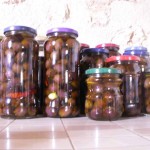
Lids need to be non-corrosive and since metal reacts with vinegar the easiest type are plastic lined jam jar lids. You can even get new lids for old jars from the suppliers of preserving jars too.
A Jam Funnel is simply a funnel with a very wide tube so its good for filling jars with lumpy preserves. Rather than buy one I’ve just cut the tube off an old plastic funnel and increased the centre hole a bit.
Filing Jars with a funnel may be easier than a spoon. However you do it always aim to pack the jars tightly leaving no air pockets. Prodding with a small spoon then tapping jars on the work surface should remove any. If you’re topping up jars with liquid make sure all the solid ingredients are well covered. Also wash off any spilt stuff while the jars and food is still warm. Pickles tend to be sticky and hard to remove once cold.
Maturing your finished chutney or pickle is often advised. This just lets the flavours develop and some of the harsh vinegar tang dissipate.
Storage of your potted preserves should be somewhere dark, relatively cool and dry. This ensures they last as long as possible. Ensure the jars are clean – you don’t want to find a crust of mouldy pickle covering your jars in six months time!
Labelling is Critical for your finished product. I say from experience you may think you’ll remember when the preserve was made and indeed what went into it but its easy to lose track. Make sure you label each jar with the date made, what it is, and when it should be consumed by. Adhesive labels are available from jar suppliers but I find these a pain to wash off to reuse the jars so I just tie a piece of string with a tag label, round the jar neck.
So there you go, some of the things you need to know if you’re making your own chutneys, pickles and so on. Canning foods does not have to be overly complicated. As you can imagine there is lots of other stuff its handy to know but that’s your lot for now. I’ll be following this up with some basic methods you should know about shortly.
For a more self sufficient future
Great advice! Canning/jarring is definitely something I want to get into, but I’ve always been intimidated by it. Maybe this summer I’ll give it a shot!
Karen’s last blog post..Don’t spend your tax refund before you get it
Definitely great to preserve – just start simply and don’t take too much notice of those books which seem to infer you need to outfit a whole new kitchen before you begin!